
Acropolis Entrance ✨
The Acropolis entrance options may surprise you – the ancient citadel, a major archaeological site dominating the city of Athens, has two fully operational gates, each offering a different route to the top.

Acropolis Entrance Options
The Acropolis of Athens features two entrance gates to the archaeological site: the main entrance located on the western side of the Acropolis, accessed from Theorias Street via the ancient Propylaea gateway, and the side entrance, also known as the Dionysus Theater entrance, situated on the southern side of the Acropolis along Dionysiou Areopagitou Street beside the Theatre of Dionysus. For a full overview of both gates and their surroundings, see our interactive Acropolis map. Both gates follow the same seasonal opening hours and require a valid ticket for entry.
Choosing the right entrance gate to either the Acropolis site can make a real difference to your visit. Each entrance is located on a different side of the Acropolis, and the two gates differ in queue length, accessibility, nearby landmarks, and the character of the climb to the Parthenon plateau. Understanding these differences before you set out helps you spend less time waiting and more time exploring.
A valid Acropolis ticket is required at either gate. Whether you hold a standard admission, a timed-entry pass, or a combo voucher that includes the Acropolis Museum, you scan or present your ticket at the turnstiles before proceeding through security screening. Both gates operate on the same schedule, opening and closing according to the site’s seasonal hours – with last entry always thirty minutes before closing.
Book the best Acropolis ticket

Acropolis & Parthenon Tickets with Optional Audio Guide
Skip the ticket lines and step into ancient history at your own pace. Explore the iconic Parthenon, Temple of Athena Nike, and Theatre of Dionysus with a multilingual audio guide that reveals the myths, legends, and stories behind Athens’ most treasured monuments.
Includes:
- Timed entry to the Acropolis
- Audio guide in English, French, German, Spanish & Italian
- Offline access with online map
Best price starting at:
36 €
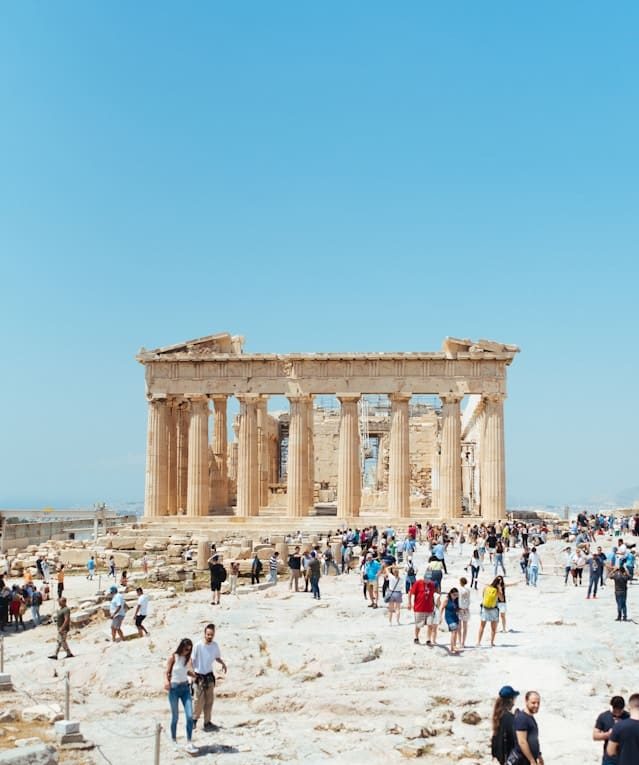
Acropolis & Parthenon Guided Tours with Entry Tickets
Explore the Acropolis with an expert guide who brings ancient history to life. Small groups, headsets for clear audio, and plenty of time for questions and photos. Enhance your visit with optional add-ons like the Acropolis Museum, Ancient Agora, or a walk through Plaka.
Includes:
- Guided tour of the Acropolis & Parthenon
- Skip-the-line entry
- Guide in English, Spanish, French, German, or Italian
Best price starting at:
67 €

Combo: Acropolis & Parthenon + Acropolis Museum Tickets
One plan, two iconic sites. Walk through the Acropolis hilltop monuments with reserved timed entry, then explore the Acropolis Museum — all connected by multilingual audio guides on your phone with offline maps, narration, and interactive content.
Includes:
- Time-slotted e-ticket to the Acropolis & Parthenon
- Entry ticket to the Acropolis Museum
- Audio guide in English, German, French, Spanish, Italian & Greek
Best price starting at:
78 €
Main Entrance – the Propylaea Gate
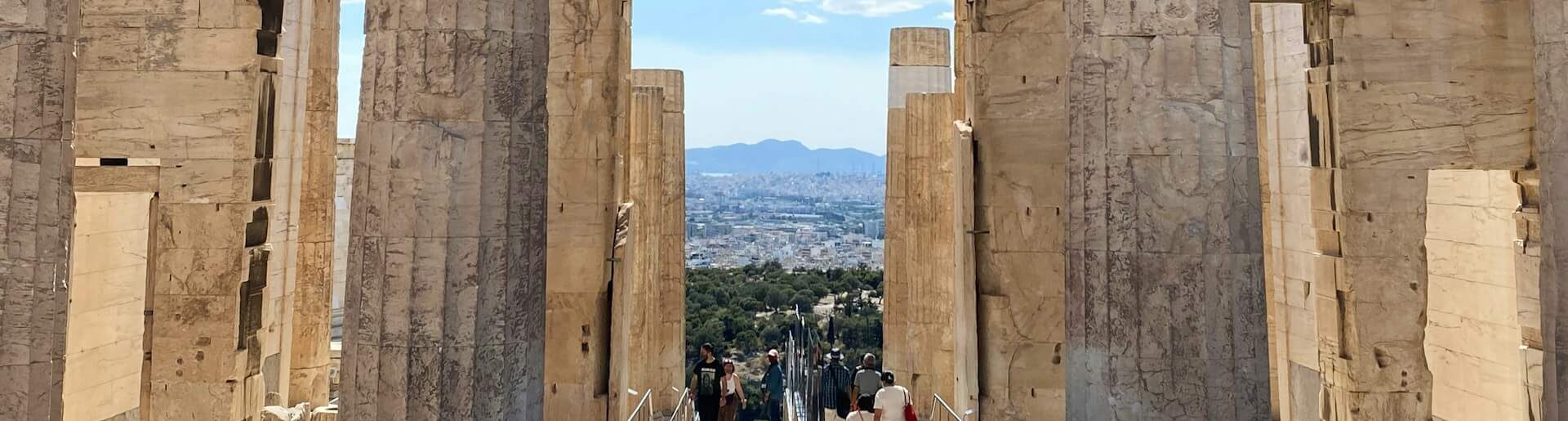
The Main Entrance is positioned at the western end of the Acropolis hill, near the terminus of Theorias Street. Visitors first pass through the Beule Gate, a notable entry point that leads toward the monumental Propylaea, the grand marble portico designed by architect Mnesicles in the 5th century BCE. The approach echoes the ancient procession that Athenians once made during the Panathenaic festival, ascending between towering Doric columns toward the sacred precinct of Athena. Special signage and marked routes guide visitors from the entrance through the site, ensuring safe and organized access, including for those with mobility impairments.
The Propylaea gate is the default meeting point for licensed guided tours. If you have pre-booked a walking tour with an expert guide, this is almost certainly where your group will gather. The main entrance is easily accessible via the Acropoli Metro Station (Line 2) or by bus 230, making it convenient for most visitors. Plan to arrive at least ten minutes before the stated start time, as the small esplanade in front of the gate offers limited shade and can get busy between 09:00 and 11:00 when multiple tour groups converge.
One practical advantage of the Main Entrance is its proximity to the Acropolis car park on Rovertou Galli Street. Visitors arriving by taxi, ride-share, or private vehicle will find the drop-off area most convenient for this gate. From the drop-off point, it is a short, mostly level walk to the ticket-check area before the path ascends through the Propylaea. A dedicated wheelchair-accessible elevator is located on the northwest side of the hill, approximately 350 meters from the main entrance, providing step-free access for visitors with disabilities and their companions.
Historically, the entrance originally featured five doorways, with a wider central door designed for processions and chariots. The north wing of the Propylaea originally housed the world’s first public art gallery, displaying mythological paintings. Architecturally, the structure features a mix of sturdy Doric columns on the facade and taller Ionic columns along the central corridor, symbolizing strength and elegance. The design is intentionally asymmetrical to accommodate the uneven terrain and pre-existing sacred sites.
During peak season, expect wait times of roughly 25 to 40 minutes at the Propylaea gate. In shoulder months or early mornings, that drops to approximately 10 to 15 minutes.
Southeast Entrance – the Theatre of Dionysus Gate
The second entrance to the Acropolis, known as the Dionysus Theater entrance or simply ‘known as the Dionysus’, is located on the southern side of the hill, beside the ancient Dionysus Theater on Dionysiou Areopagitou Street. This southeast entrance is a popular alternative to the main Propylaea gate and is within easy walking distance of the Acropolis Museum, as well as the museum shop where visitors can purchase souvenirs and gifts.
Entering through the Dionysus Theater entrance gives you direct access to several notable nearby attractions, including the oldest theater in Europe – the Dionysus Theater itself – the Asclepius Sanctuary, and the Thrasylus sponsor’s monument. The south exit is also available as an alternative route for visitors, providing additional flexibility for exploring the site.
Choosing this gate usually rewards you with shorter queues. During peak season, the wait here runs approximately 15 to 25 minutes – often half the length experienced at the Propylaea entrance. In quieter months, the wait can be as brief as 5 to 10 minutes. The trade-off is a steeper, less even path once you pass the turnstiles. The route winds through the south-slope archaeological zone, past the Stoa of Eumenes and the remains of the Asclepius Sanctuary, before reaching the Parthenon terrace. The ascent is gradual enough for most visitors but involves unpaved sections, loose gravel, and occasional stone steps. Other attractions accessible from this entrance include various monuments, ruins, and historical sites scattered along the southern side.
If you hold a timed-entry or skip-the-line ticket purchased through an authorised reseller, the Dionysus Theater entrance is typically the designated access point printed on your voucher. For current prices and booking options, see our guide to the official Acropolis tickets website. Double-check your confirmation email, but in the vast majority of cases, timed passes correspond to this gate.
The Dionysus Theater entrance is not wheelchair-accessible due to the uneven terrain and moderate uphill climb required after clearing the turnstiles.
Which Entrance to the Acropolis Should You Use?
Your ideal Acropolis entrance depends on a few personal factors: mobility requirements, ticket type, tolerance for queues, and what you want to see first. Here are the most common visitor scenarios and the gate that best fits each one.
Families with young children or elderly relatives should use the Main Entrance, located on the west slope. Its pathway is wider, better maintained, and connects to the elevator that carries visitors with limited mobility to the hilltop. The north side and area north of the Acropolis feature the North Slope, which is wheelchair accessible via a specially designed entrance-exit for people with disabilities, located north of the main entrance. Parents attending with children or two or more infants can benefit from these accessible routes and facilities.
Solo travellers seeking speed should head to the Southeast Entrance. You will encounter shorter lines and can begin your ascent through the atmospheric south-slope ruins almost immediately. If you arrive within the first hour of opening, the queue may be negligible.
Visitors joining a guided tour should go to the Main Entrance. Nearly every licensed tour operator in Athens gathers guests outside the Propylaea gate. Confirm your meeting point in advance, but expect to use the western gate if your tour includes a professional guide.
Holders of skip-the-line or timed tickets should go to the Southeast Entrance. Your e-ticket will typically specify the Theatre of Dionysus gate as the entry point. Arriving at the wrong gate means walking around the perimeter, adding ten to fifteen minutes to your journey. Always verify the gate indicated on your booking confirmation before you leave your hotel.
If you are visiting during July or August and plan to arrive between 10:00 and 13:00, the southeastern entrance to the Acropolis can cut your total wait time by as much as half compared to the Propylaea gate.
Plan your visit to the Acropolis of Athens
When planning your visit to the Acropolis archaeological site, it’s important to verify opening hours, special events, and any maintenance schedules in advance to ensure a smooth experience. The Acropolis archaeological site occasionally offers free entry days, which are especially popular with budget travelers, though these days can attract larger crowds.
Athens has a well-connected public-transport network, and reaching either Acropolis entrance is straightforward from most parts of the city centre.
By Metro: Acropoli station on Line M2 (the red line) is the closest metro stop to both gates. From the station exit, follow the pedestrianised Dionysiou Areopagitou Street – turning right leads to the southeastern entrance in about four minutes, while turning left and continuing uphill brings you to the Propylaea gate in roughly eight minutes. Monastiraki station on Line M3 (blue line) offers a scenic approach through the Plaka neighbourhood, and Thiseio station on Line M1 (green line) provides easy access to the western side of the hill.
By Bus and Trolleybus: Bus route 230 stops at Akropolē, one of the most convenient stops for the Acropolis entrance. Additional routes serving the wider area include buses 227, 035, 040, 550, 856, A2, and A3. Trolleybuses 1, 2, 4, 5, 11, 12, and 15 also pass nearby, with the Makrygiannē and Gargaretta stops placing you a short walk from either gate.
By Tram: Tram line T6 stops at Leoforos Vouliagmenis, from where you can walk northwest toward either entrance to the Acropolis. The tram is particularly useful if you are staying along the coastal stretch between Syntagma and Glyfada.
By Car or Taxi: Limited paid parking is available near the base of the hill on Rovertou Galli Street and in surrounding side streets. Taxi drop-offs work best at Rovertou Galli for the Main Entrance or on Dionysiou Areopagitou Street for the southeastern gate. During morning rush hours, allow extra time for traffic in the narrow streets around Plaka and Makrigianni.
The Acropolis entrance designated for visitors who use wheelchairs or have reduced mobility is the Main Entrance on the western slope. An elevator and a chairlift are installed on the northwest face of the rock specifically for this purpose. The lift is reserved exclusively for visitors with disabilities and their companions and operates during the site’s regular opening hours.
Once at the top, two established pathways allow wheelchair users to explore the hilltop. The northern route passes between the Propylaea and the north wall, offering views of the Erechtheion, while the eastern route runs along the south flank of the Parthenon. Both paths are relatively level compared to the broader site terrain, though some surfaces remain uneven. Staff members are stationed at key junctions to provide assistance. The elevator is located approximately 300 metres from the archaeological site’s exit, so plan your return route accordingly.
Before you pass through either Acropolis entrance, all visitors must clear an airport-style security screening. Bags pass through an X-ray scanner, and individuals walk through a metal detector. The process is typically efficient, but during peak hours it can add several minutes to your wait.
Large backpacks, suitcases, and oversized bags are not permitted beyond the gates. Free lockers are available near both entrances, so you can store bulky items securely before entering. Prohibited items include sharp objects, professional camera tripods, extended selfie sticks, and drones. Standard photography – including smartphone cameras – is allowed throughout most of the site once you pass security, although flash photography is restricted in certain enclosed areas.
One rule that catches many visitors off guard is the no-re-entry policy. Once you exit the Acropolis gates, your ticket is no longer valid for a second entry. Plan your water breaks, rest stops, and photo sessions while you are still inside the perimeter. If you need to leave and return, you will need a new ticket.
Best Time to Arrive at the Acropolis Entrance
Timing your arrival can dramatically affect your experience, especially when considering waiting time at the entrances. The site opens at 8:00 AM year-round, and the first ninety minutes tend to have minimal waiting time, making it the quietest period. Arriving right at opening means you can enjoy the Parthenon plateau with relatively few other visitors and softer morning light – ideal for photography. Additionally, there is almost no shade on site, so early morning or late afternoon visits are recommended to avoid the harsh midday sun.
The busiest window falls between 10:00 and 13:00, when large tour groups converge on the Propylaea entrance and cruise-ship excursions arrive from Piraeus, often resulting in significant waiting time, especially for those purchasing tickets on-site. If a mid-morning visit is unavoidable, using the southeastern entrance to the Acropolis will at least spare you the worst of the queue. Late-afternoon slots – roughly two hours before closing – offer another window of reduced crowds and shorter waiting times, though the light shifts to a warm amber tone.
Please note that certain restricted areas within the site are off-limits to visitors for preservation and safety reasons. Respect all signage and barriers to help protect the archaeological site.
During winter months (November through March), the site closes at 5:00 PM. In summer (April through August), closing extends to 8:00 PM, with gradual reductions during September and October.
Frequently asked questions
01 How many entrances does the Acropolis have?
The Acropolis of Athens has two entrances. The Main Entrance is on the western side of the hill at the end of Theorias Street, accessed through the ancient Propylaea gateway. The Southeast Entrance is on Dionysiou Areopagitou Street beside the Theatre of Dionysus, near the Acropolis Museum. Both gates follow the same seasonal opening hours and require a valid ticket.
02 Where is the entrance to the Acropolis exactly?
The Main Entrance is located at the end of Theorias Street on the western slope, identifiable by the large Propylaea columns and nearby parking area. The Southeast Entrance is on Dionysiou Areopagitou Street, right beside the Theatre of Dionysus and a short walk from the Acropolis Museum. Both are clearly signposted and accessible from Acropoli metro station on Line M2.
03 Which Acropolis entrance has shorter queues?
The Southeast Entrance near the Theatre of Dionysus consistently has shorter wait times. During peak hours, you may wait 15 to 25 minutes here compared to 25 to 40 minutes at the Main Entrance. If avoiding lines is your priority, head to the southeastern gate – especially during summer mornings.
04 Which entrance should I use for a guided tour?
Most guided tours meet at the Main Entrance on the western side, near the Propylaea. Check your booking confirmation for the exact meeting point and arrive at least ten minutes early to locate your guide.
05 Can wheelchair users access the Acropolis?
Yes. Wheelchair users should use the Main Entrance, where an elevator and chairlift provide step-free access to the hilltop. The Southeast Entrance is not wheelchair-accessible due to its steep, uneven pathway. Once at the summit, two established routes allow mobility-impaired visitors to explore the Parthenon and Erechtheion areas.
06 Which entrance do skip-the-line ticket holders use?
Timed-entry and skip-the-line tickets are typically assigned to the Southeast Entrance beside the Theatre of Dionysus. Check the gate indicated on your e-ticket or confirmation email to avoid walking to the wrong side of the hill.
07 Is re-entry allowed once I leave the Acropolis?
No. The Acropolis enforces a strict no-re-entry policy. Once you exit through either gate, your ticket cannot be used to enter again. Complete your entire visit – including rest breaks and photos – before stepping outside the perimeter.
08 What items are prohibited at the Acropolis entrance?
Visitors are kindly requested not to bring large backpacks, luggage, strollers, food, or drinks other than plain water. Prohibited items also include sharp objects, camera tripods, extended selfie sticks, and drones. All museum visitors must pass through airport-style scanners, and large bags are prohibited. Small bags are allowed after X-ray screening. Free lockers are available near both entrances for oversized items.
09 How do I walk between the two Acropolis entrances?
No strollers are allowed inside the site. Visitors are kindly requested to use baby carriers instead, as these are recommended for families with young children.
10 What time should I arrive to avoid long queues at the Acropolis entrance?
Construction of the Acropolis was halted in 431 BCE due to the outbreak of the Peloponnesian War, leaving parts of the structure unfinished.